

Description
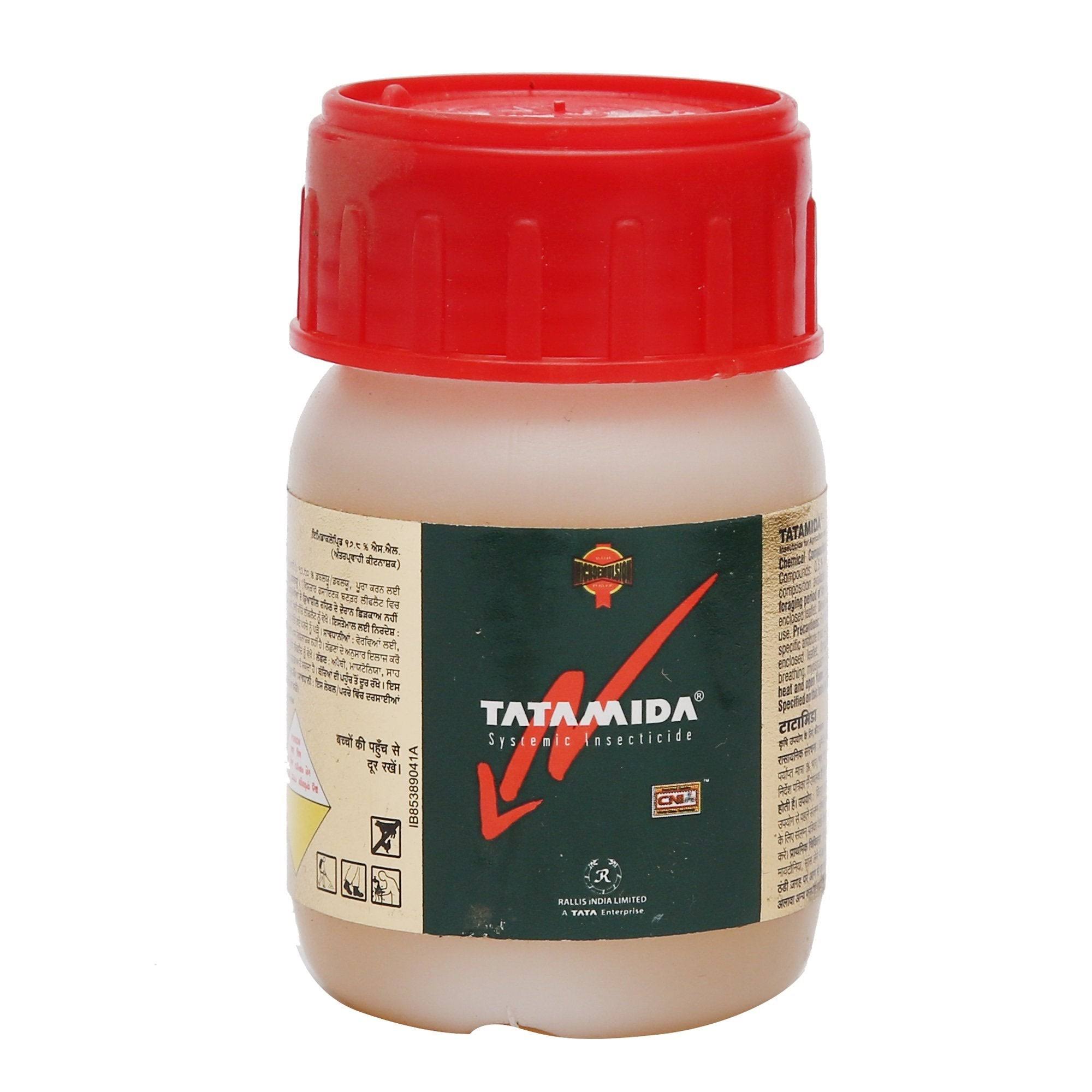
Bayer Tatamida Insecticide
Bayer Tatamida is a highly effective insecticide known for its broad-spectrum activity against various agricultural pests. Its development combines advanced chemistry with sustainable practices, making it a preferred choice among farmers seeking to protect their crops from harmful insects.
Composition:
Imidacloprid 17.8% SL
Benefits:
1. Broad-spectrum Activity: Suitable for targeting a wide range of pests, increasing versatility in pest management.
2. Systemic Action: Provides both contact and systemic action, ensuring thorough protection of crops.
3. Fast Action: Rapid knockdown of targeted pests helps minimise crop damage.
4. Residual Activity: Offers lasting protection, reducing the need for frequent applications.
5. Compatibility: Can often be used in conjunction with other pest management practices and crop protection products.
Recommended Crops
Tatamida is recommended for a variety of crops, including:
- Cereals: Such as wheat, barley, and corn
- Fruits: Apples, pears, and other tree fruits
- Vegetables: Tomatoes, peppers, and leafy greens
- Legumes: Such as beans and peas
- Root Crops: Potatoes and carrots
Targeted Insects:
Tatamida is effective against a broad range of pests, including:
- Aphids
- Thrips
- Whiteflies
- Leafhoppers
- Caterpillars
- Beetles
Doses:
The recommended dose of Bayer Tatamida can vary depending on the crop and the targeted pests. Generally, the application rates are as follows:
- Field crops: 0.5 to 1.0 litre per hectare
- Vegetables and fruits: 0.3 to 0.7 litres per hectare, depending on the severity of infestation
It is essential to consult the product label for specific rates and guidelines tailored to your crop and region.
FAQs:
1. Is Bayer Tatamida safe for beneficial insects?
Bayer Tatamida is designed to target specific pests while minimising risks to beneficial insects when used according to the label instructions. However, it’s advisable to check local regulations and guidelines, especially regarding pollinators.
2. How long does the residual effect last?
The residual effect of Tatamida depends on environmental conditions, application rates, and pest pressure. Generally, it can provide effective control for several weeks post-application.
3. Can Tatamida be applied during flowering?
Application during flowering may pose risks to pollinators. Care should be taken to follow manufacturer recommendations, and alternative methods may be employed to minimise exposure to non-target species.
4. What is the ideal time to apply Tatamida?
Timing depends on the specific crop and pest lifecycle. It’s best to apply Tatamida when pests are first observed, preferably in early infestation stages for maximum efficacy.
5. Are there any specific safety measures to follow?
Yes, always wear protective clothing, avoid application in windy conditions, and follow all safety guidelines provided on the product label. Reading the label before application is crucial for effective and safe use.
By adhering to the guidelines and understanding their optimal use, Bayer Tatamida can significantly enhance crop protection and yield. Always consult with local agricultural experts for tailored advice specific to your region and conditions.